Humanizing vs. Virbe: 3D avatars across every channel
Virbe and Humanizing both work with conversational, speaking avatars, but they pursue different delivery models. Virbe positions itself as a platform and framework for interactive 3D avatars, or 'Virtual Beings': companies use it to build conversational AI avatars and digital brand ambassadors and deploy them on the principle of 'Create Once - Deploy Anywhere' across web, mobile, kiosk as well as VR and AR. The platform connects various 3D avatar systems and conversational AI frameworks and provides SDKs for integration. Humanizing, by contrast, delivers ready-to-use, integrated avatar solutions for real service touchpoints - on kiosk, totem, tablet, web and smartphone, resolving cases end-to-end and GDPR-compliant.
The decisive difference lies in how much you build yourself. Virbe provides the building blocks and tools with which you design an interactive 3D avatar, connect it to your conversational AI and distribute it across multiple channels. Humanizing delivers the finished solution at the point of contact - agentic, in over 100 languages, accessible under the BFSG, hosted in Germany and accompanied by a personal solution architect. This article places both providers fairly and shows which solution fits whom.
What is Virbe?
Virbe is a platform and framework with which companies create and deploy interactive, AI-powered 3D avatars - described by the vendor as 'Enterprise-ready AI-powered Virtual Beings' with a seamless, multi-channel customer experience. At its core is the principle 'Create Once - Deploy Anywhere': an avatar designed once can be distributed across web, mobile, kiosk as well as VR and AR.
Technically, Virbe emphasizes openness and integration: it supports different 3D avatar systems (such as Ready Player Me, Unreal MetaHuman or Character Creator), connects common conversational AI frameworks and provides SDKs for JavaScript, Unity and Unreal Engine. Virbe thus addresses teams that want to design a digital brand ambassador themselves and embed it into their own experiences - from the website to immersive VR/AR scenarios.
- Platform and framework for interactive 3D avatars
- 'Create Once - Deploy Anywhere' across web, mobile, kiosk, VR and AR
- Connects various 3D avatar systems and conversational AI frameworks
- SDKs for JavaScript, Unity and Unreal Engine
- Focus on digital brand ambassadors and multi-channel experience
What does Humanizing do differently?
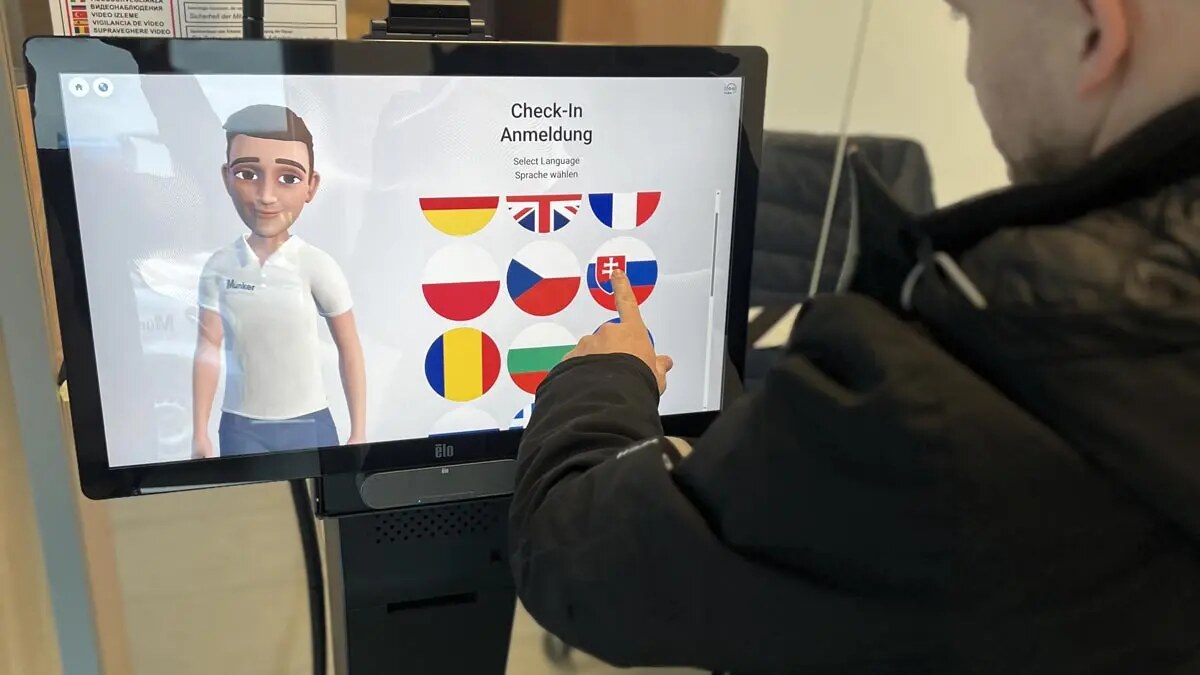
Humanizing does not deliver a build-it-yourself platform, but finished, integrated avatar solutions for real service touchpoints. The avatar listens, speaks freely in real time and resolves cases end-to-end - rather than merely forwarding or staging an experience. It runs flexibly across hardware on kiosk, totem, tablet, web and smartphone, right where customers actually need help.
Added to this are the properties that matter most in the DACH region: over 100 languages, accessibility under the BFSG, and GDPR-compliant hosting in Germany with data kept in the EU. Humanizing offers both accompanied project work (KIM, Lucas, Charlotte, Promoter) and the self-service variant Cosmo from EUR 40 per month - each with a personal solution architect and rollout support.
- Agentic: resolves cases end-to-end
- Over 100 languages, accessible under the BFSG
- GDPR-compliant, hosted in Germany, data in the EU
- Flexible across hardware: kiosk, totem, tablet, web, smartphone
- Project work plus self-service Cosmo from EUR 40 per month
- Personal solution architect and rollout support
How do the approaches differ?
Both providers create speaking, interactive avatars - but their strengths lie in different places. Virbe emphasizes openness, design freedom and reach across many channels: you connect your own 3D models and conversational AI and distribute the result from the website into VR/AR. Humanizing focuses on a ready-to-use, agentic avatar that solves concrete needs at the point of contact while meeting the regulatory requirements of the DACH region.
The following comparison summarizes the dimensions that tip the scales in practice - from multilingualism through agentic behavior and hardware to data protection, accessibility and the delivery model.
- Delivery model: Humanizing finished solution, Virbe platform and SDK to design
- Agentic behavior: Humanizing resolves cases end-to-end
- Multilingualism: Humanizing over 100 languages at the point of contact
- Hardware: Humanizing runs on kiosk, totem, tablet, web, smartphone
- Data protection: Humanizing GDPR-compliant, hosted in Germany, data in the EU
- Accessibility: Humanizing built to the BFSG
Which use cases and what ROI?
Virbe plays to its strengths where a self-designed digital brand ambassador across many channels is the centerpiece - for example as an interactive element on the website, in an immersive VR/AR experience or in brand-led customer experience projects. Anyone seeking maximum design freedom and channel reach, and willing to handle the integration themselves, will find a flexible platform here.
Humanizing raises ROI at the real point of contact: because the avatar resolves cases end-to-end, it relieves staff at reception, branch and service, keeps waiting times short and serves multiple languages without extra effort. Over 25 savings banks already use Humanizing avatars in production; added to this are wayfinding in large buildings, truck check-in at the factory gate and product advice in retail.
- Virbe: digital brand ambassador across web, mobile and VR/AR
- Humanizing: reception and branch - clarify needs and close them directly
- Humanizing: multilingual wayfinding in large buildings
- Humanizing: truck check-in at the factory gate without waiting
- Humanizing: self-service on the website that actually resolves cases
Which solution fits whom?
Both providers are strong in their field; the choice depends on the goal. If you want to design an interactive 3D avatar yourself, connect it to your own conversational AI and deploy it across many channels including VR/AR, Virbe is the obvious address. If the aim is to put a ready-to-use, integrated and data-protection-compliant solution into production quickly at the point of contact, Humanizing is the right tool.
In short: Virbe is a flexible platform for interactive 3D avatars and digital brand ambassadors across many channels, Humanizing a ready-to-use, integrated and GDPR-compliant touchpoint solution with a DACH focus. Anyone wanting to close real service cases multilingually and accessibly in the German-speaking region is on the direct path with Humanizing.
- Virbe: platform and SDK to design yourself across many channels
- Humanizing: ready-to-use, integrated touchpoint solution
- Humanizing: GDPR-compliant, German hosting, accessible under BFSG, 100+ languages
- Humanizing: project work plus self-service Cosmo, personally accompanied
Frequently asked questions
No. Virbe is a platform and framework with which companies create interactive 3D avatars themselves and deploy them across many channels. Humanizing delivers ready-to-use, integrated avatar solutions that speak freely at the point of contact and resolve cases end-to-end.
Virbe uses this term for the principle of deploying an avatar designed once across multiple channels - for example web, mobile, kiosk as well as VR and AR. You bring the integration and conversational AI yourself.
Yes. Humanizing avatars are hosted GDPR-compliant in Germany, and the data stays in the EU. They speak over 100 languages and are accessible under the BFSG. More than 25 savings banks already use them in production.
When you want to design an interactive 3D avatar yourself, connect it to your own conversational AI and distribute it across many channels including VR/AR. For a ready-to-use, integrated and data-protection-compliant solution at the service touchpoint, Humanizing is the fit.
The avatar does not merely forward or display information, but resolves cases end-to-end at the point of contact. It listens, asks follow-up questions and actually brings the matter to a close - around the clock and identically at every location.
Yes. Alongside the accompanied project work (KIM, Lucas, Charlotte, Promoter) there is the self-service variant Cosmo from EUR 40 per month. Both paths are supported by a personal solution architect and rollout support.
See Humanizing Avatars in action
Book a no-obligation intro call — we'll show you the use case live at your touchpoint.