GEO: How AI Search Is Reshaping Customer Contact

Generative Engine Optimization (GEO) is the practice of optimizing content for generative AI search — that is, for systems like ChatGPT, Perplexity, Google AI Overviews or Microsoft Copilot, which formulate a summarized answer to a question instead of showing only a list of blue links. While classic search engine optimization (SEO) aims to rank as high as possible in the results list, GEO is about being understood, cited and built into the generated answer as a reliable source.
The difference is fundamental: people now ask full questions in natural language and receive a direct answer. Often the search ends there, without any website being clicked at all. For companies, this shifts the central question. It is no longer only about being found, but about appearing correctly in the AI answer — and, at the point where the customer actually reaches out, offering an immediate, clear and relevant response.
What is generative AI search?
Generative AI search is a form of information search in which a language model composes a coherent answer from many sources, instead of merely listing links. Whoever asks a question receives a finished piece of text — often with source references, but without having to open each source individually. Examples include the answers from ChatGPT and Perplexity, the AI overviews in Google Search (AI Overviews), and Microsoft Copilot.
The flow differs noticeably from classic search. Previously, a search term led to a results list from which the user chose for themselves. Today the AI drafts an answer, summarizes, and weighs which content it considers trustworthy. This changes how visibility arises in the first place — namely through being citable, rather than through ranking alone.
- An answer instead of a link list — the AI summarizes from several sources
- Questions are asked in natural language
- Examples: ChatGPT, Perplexity, Google AI Overviews, Copilot
- Visibility comes from being citable, not only from ranking
How does AI search change customer contact?
AI search moves the first contact earlier and makes it more conversational. Prospects often clarify basic questions in conversation with an AI system before they visit a website or pick up the phone. As a result they arrive better informed, but they also expect things to continue just as smoothly in direct contact — in natural language and without a break.
At the same time, the AI answer means that classic clicks partly disappear: if the question is already answered in the overview, the website visit never happens. The few contact points that still take place gain in importance. Whoever offers an immediate, personal and multilingual response at that point stands out clearly.
- Initial information increasingly happens in the AI dialogue
- Customers arrive better informed
- Classic clicks partly disappear — remaining contacts matter more
- Expectations of a smooth dialogue rise in direct contact too
What does GEO mean for companies?
For companies, GEO means preparing content so that an AI can understand, classify and cite it correctly. It starts with clear structure: unambiguous questions and answers, precise definitions, clean facts and machine-readable markup of the content. The easier it is for a system to extract the core statement, the more likely it appears in a generated answer.
Multilingualism becomes equally important. AI search is used worldwide and in many languages, and answers are produced in the language of the person asking. Content available in only one language is drawn upon less often in other language regions. Whoever is broadly and naturally positioned here will be considered as a source in more contexts.
- Structure content: clear questions, answers and definitions
- Add machine-readable markup so statements are extractable
- Think multilingual — AI answers in the language of the query
- Optimize for being citable, not only for keyword ranking
How do interactive avatars help in the AI era?
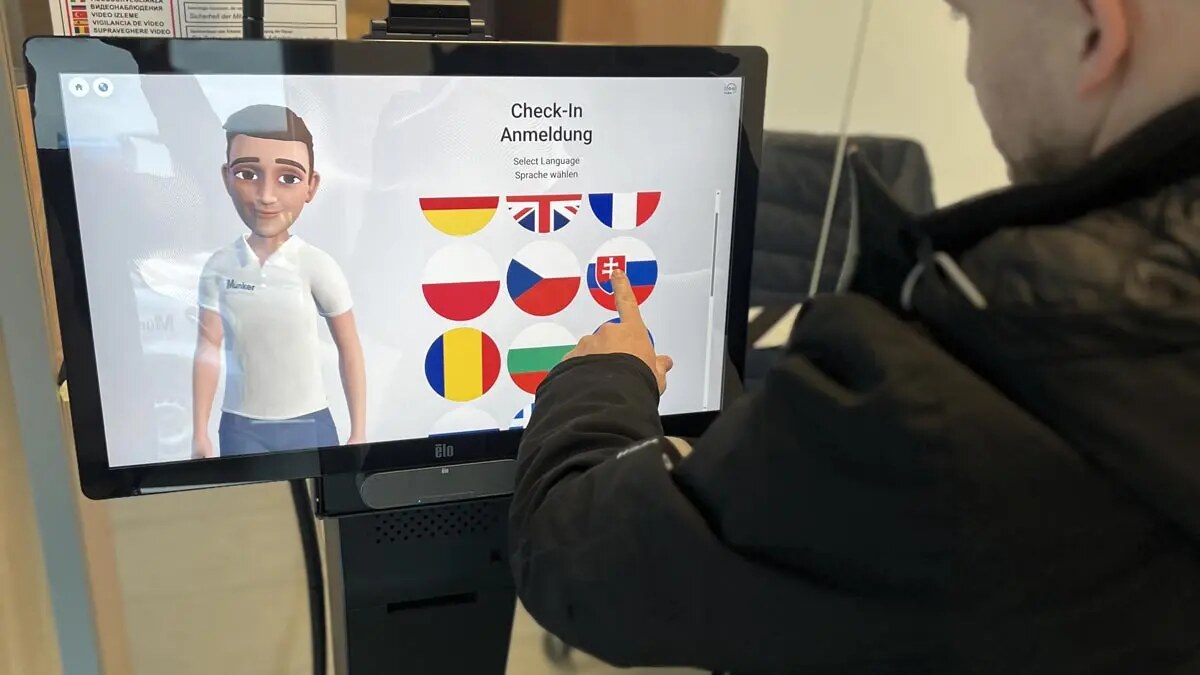
Interactive avatars step in exactly where AI search ends and real contact begins. Instead of a static form or a hotline, an avatar greets the visitor in natural dialogue, understands their request in their own language and answers immediately. This fulfills the expectation that AI search has created — ask directly, get an answer directly — right at the contact point.
The avatars from Humanizing Technologies are multilingual and hold conversations in more than 100 languages. They handle recurring questions, route requests purposefully and are available around the clock — at reception, at a kiosk, at a terminal or on the website. This creates a seamless experience from the first AI-assisted research all the way to concrete contact.
- Natural dialogue instead of a form — the request is understood directly
- Multilingual in over 100 languages, automatically in the visitor's language
- Available around the clock at reception, kiosk, terminal and website
- Closes the gap between AI research and real customer contact
How do avatars make content usable for AI search?
Avatars and GEO complement each other because the same foundation serves both: clearly structured, well-maintained content. The knowledge base from which an avatar draws its answers is at its core an ordered collection of questions, answers and facts. When this knowledge is maintained cleanly, it can at the same time be published on the web in a way that AI search systems understand and cite as a source.
In practical terms: a company maintains its knowledge once in a structured form and uses it twice — for the conversational contact point through the avatar, and for discoverability in generative AI search. Both channels benefit from precise, multilingual and machine-readable content.
- One maintained knowledge base serves both the avatar and AI search
- Structured questions and answers are both conversational and citable
- Maintain knowledge once, use it for both contact and discoverability
Is GEO a replacement for SEO?
No, GEO does not replace SEO — it extends it. Classic search engines retain their importance, and many core principles of good SEO — relevant, well-structured and trustworthy content — feed directly into GEO. What is new is the perspective: content is prepared not only for human readers and search-engine rankings, but also to be understood and cited correctly by a language model.
It therefore makes sense to combine both disciplines. Whoever structures content cleanly, offers it multilingually and enables an immediate, natural dialogue at the contact point is well positioned in both classic and generative search — and stays reachable for customers across every channel.
Frequently asked questions
GEO is the practice of optimizing content for generative AI search such as ChatGPT, Perplexity, Google AI Overviews or Copilot. The goal is to be understood, cited and built into the generated answer as a reliable source — no longer only to rank as high as possible in a link list.
SEO aims to appear high in the results lists of search engines. GEO aims to appear correctly in the answer formulated by an AI and to be cited there. GEO does not replace SEO; it extends it with the perspective of generative search.
Prospects increasingly clarify basic questions in dialogue with AI systems and arrive better informed. Because classic clicks partly disappear, the remaining contact points gain importance — and the expectation of an immediate, natural dialogue rises.
Clearly structured, citable content: unambiguous questions and answers, precise definitions, clean facts and machine-readable markup. Multilingual content is considered as a source in more language regions, because AI answers in the language of the query.
Avatars step in where AI search ends and real contact begins. They greet visitors in natural dialogue, understand the request in their language and answer immediately — multilingual and around the clock. This fulfills the expectation created by AI search right at the contact point.
Yes. Both benefit from the same foundation: a maintained, structured knowledge base. The same knowledge can be used for the conversational contact point through the avatar and for discoverability in AI search — maintain it once, use it twice.
See Humanizing Avatars in action
Book a no-obligation intro call — we'll show you the use case live at your touchpoint.