Integrating Avatars with ERP, CRM, HIS & PIM
Yes, interactive avatars can be connected to existing enterprise systems — such as ERP, CRM, a hospital information system (HIS), a PIM, telephony or product data feeds. Which integration makes sense is defined individually per project: not every avatar needs an integration, and where one is wanted, it is implemented to fit your system landscape.
You work together with a personal solution architect who plans the IT setup with you. Your data stays with you, hosting takes place in Germany or the EU, and processing is GDPR-compliant. Important: an integration is an option, not a requirement — many use cases work perfectly well without any integration at all.
Which systems can an avatar connect to?
A Humanizing Avatar can in principle be connected to the systems that hold the data and processes relevant to the use case. Which interface is actually implemented depends on the project — the following system classes are typical candidates:
The deciding factor is always the use case: an avatar is only connected where the link genuinely benefits the conversation or the downstream process.
- ERP — e.g. to hand processes over into downstream workflows
- CRM — for context on customers and their requests
- HIS (hospital information system) — optional connection in clinical settings
- PIM and product data feeds — current product and assortment data
- Telephony — integration into existing telephony flows
- Other data sources by individual project agreement
How does the integration work?
The integration follows an individual project: at the start, you clarify together with your personal solution architect which systems are involved, what data is needed and what the IT setup should look like. Only from that does the concrete integration emerge.
So there is no one-size-fits-all standard interface, but a solution tailored to your system landscape. Only what the use case requires is connected — keeping the effort manageable.
Banking example: how does KIM feed into downstream processes?
The banking avatar KIM can capture a request and hand it over into downstream banking processes — instead of letting the conversation end at the avatar, the appropriate next step is triggered. This turns the interaction into an end-to-end process.
How deep this handover goes is agreed per project. The integration follows the system landscape of the respective bank, not a fixed scheme.
Clinical and product example: HIS and PIM
In a clinical setting, the avatar Charlotte can optionally be connected to a hospital information system (HIS) — depending on what information is needed in the conversation and what the clinic releases. The connection is optional and decided per project.
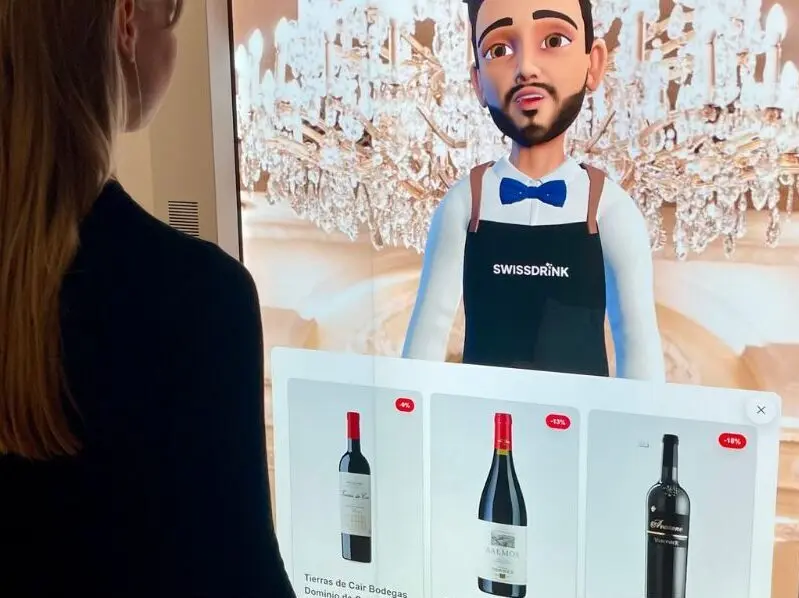
In retail and at trade fairs, the Promoter avatar can be connected to a PIM or to product data feeds. This way the avatar speaks based on current product and assortment data — and stays as up to date as your other channels.
What if an avatar is not connected to a system?
Not every avatar is connected to an enterprise system — and that is by design. The truck check-in avatar Lucas, for example, does not work with an ERP integration and has no public API. Instead, it is managed via its own control dashboard, where you maintain content and processes yourself.
This shows that a system integration is an option, not a requirement. Many use cases work without any integration — through a dedicated dashboard, curated content and the avatar's own logic. Whether an integration makes sense is decided solely by the use case.
Where does the data stay with an integration?
Your data stays with you. An integration accesses the systems you release — data sovereignty remains in your organization. There is no obligation to permanently hand data out of your environment.
Hosting takes place in Germany or the EU, and processing is GDPR-compliant. Which data flows and to what extent is defined within the project, keeping it transparent and controllable.
- Data sovereignty stays with the customer
- Hosting in Germany or the EU
- GDPR-compliant processing
- Scope of the integration defined per project
Frequently asked questions
Yes. Avatars can be connected to systems such as ERP, CRM, HIS, PIM, telephony or product data feeds. Which integration makes sense is clarified individually per project — an integration is an option, not a requirement.
Together with a personal solution architect, you clarify which systems are involved and what the IT setup looks like. From that emerges an integration tailored to your system landscape rather than a one-size-fits-all standard interface.
No. Lucas does not work with an ERP integration and has no public API. It is managed via its own control dashboard, where content and processes are maintained.
The data stays with you. Hosting takes place in Germany or the EU and processing is GDPR-compliant. Which data flows and to what extent is defined per project.
No. Many use cases work entirely without an integration — through a dedicated dashboard and curated content. Whether an integration makes sense is decided solely by the use case.
Yes, optionally. The Promoter avatar can be connected to a PIM or to product data feeds so that it speaks based on current product and assortment data. The connection is implemented per project.
See Humanizing Avatars in action
Book a no-obligation intro call — we'll show you the use case live at your touchpoint.