Why interactive avatars? Because technology needs a face.
An interactive avatar addresses people on its own, responds in natural language and completes requests together with them. That draws attention in public space, makes technology accessible — and, as a deliberately non-photorealistic character, is accepted by young and old alike.
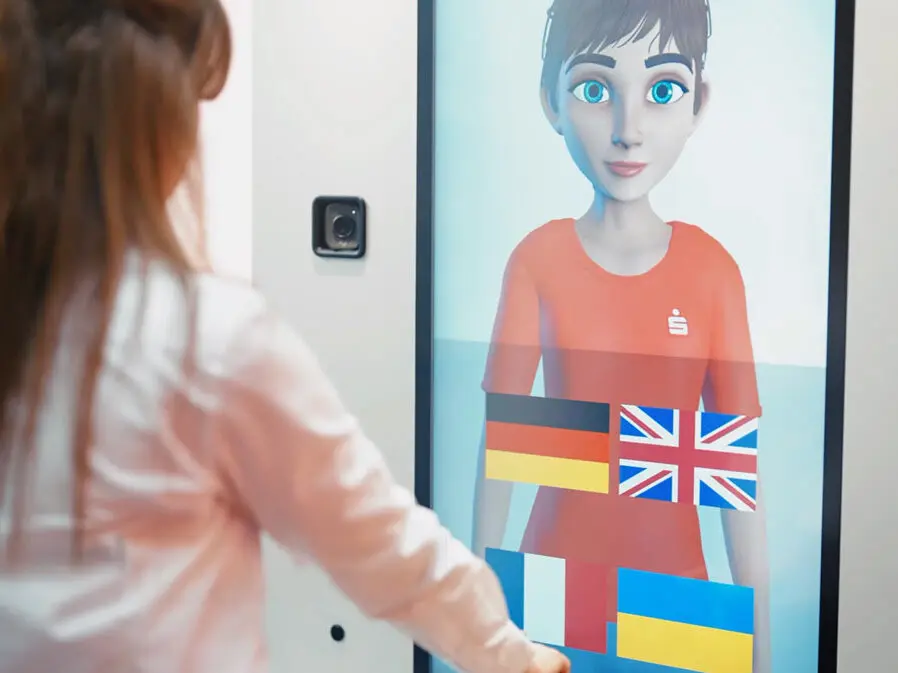 Interactive · Proactive · Accessible
Passive technology waits. An avatar approaches people.
Attention
Gaze, movement and voice activate our perception more strongly than any silent display. An avatar reads as a counterpart — and passing footfall turns into real interaction.
Accessibility
Conversation is the most natural interface people know. No app, no account, no jargon — you say in your own words what you need, in over 100 languages.
Action
Proactivity means taking the first step: greeting, offering help, guiding to the result. It is exactly this impulse that decides whether a passer-by becomes a user.
Why a character — and deliberately not photorealistic?
A clearly recognizable, friendly avatar is accepted at scale because it sidesteps the traps that photorealistic faces fall into. These six effects work together — and add up to one goal: to bring people joy instead of pressure.
A character is allowed to be a character
An almost-real face that feels subtly wrong triggers discomfort. A drawn character never opens that problem in the first place.
Honestly artificial, not deceptively real
In an era of manipulated videos, an obviously artificial character creates trust instead of suspicion — it is honest about what it is.
Realistic expectations of intelligence
A perfectly human face raises the expectation of omniscience. A likeable character calibrates the expectation — and disappoints less often.
Limits are forgiven
If something doesn't work, people forgive a friendly character a gap in knowledge — just as they would forgive a helpful robot. That keeps the interaction positive.
No one feels judged
An avatar doesn't judge, doesn't get impatient and treats everyone the same. Sensitive or repeated questions come easier — the very strength that also speaks for a robot.
Joy instead of obligation
A playful, friendly character shifts the experience from an obligation to a positive moment. Someone who finds an interaction pleasant will use it again.
This is what character avatars look like in the field.
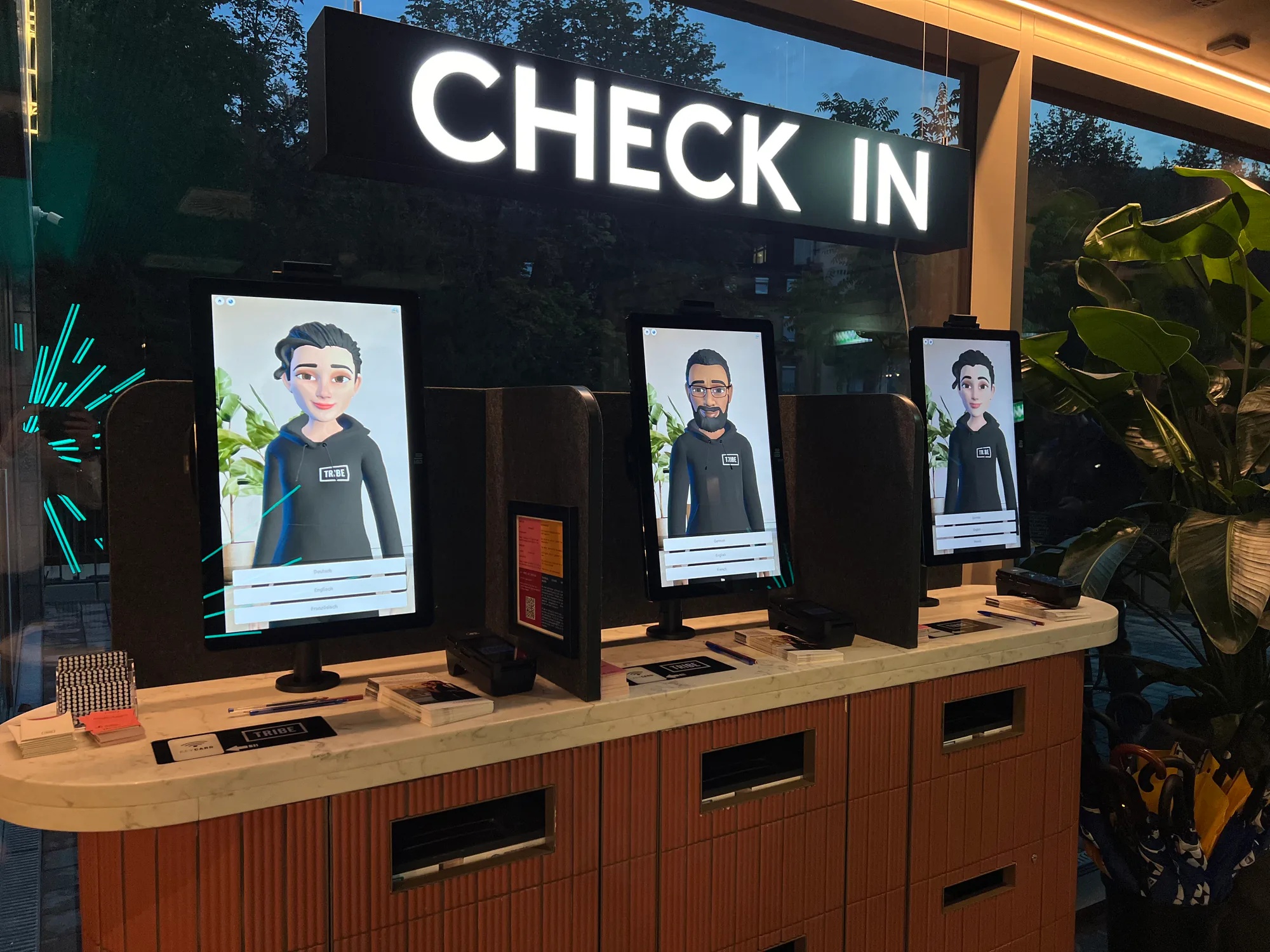
Self-service at check-in
Character avatars on totems and kiosks handle check-in — friendly, multilingual and around the clock.
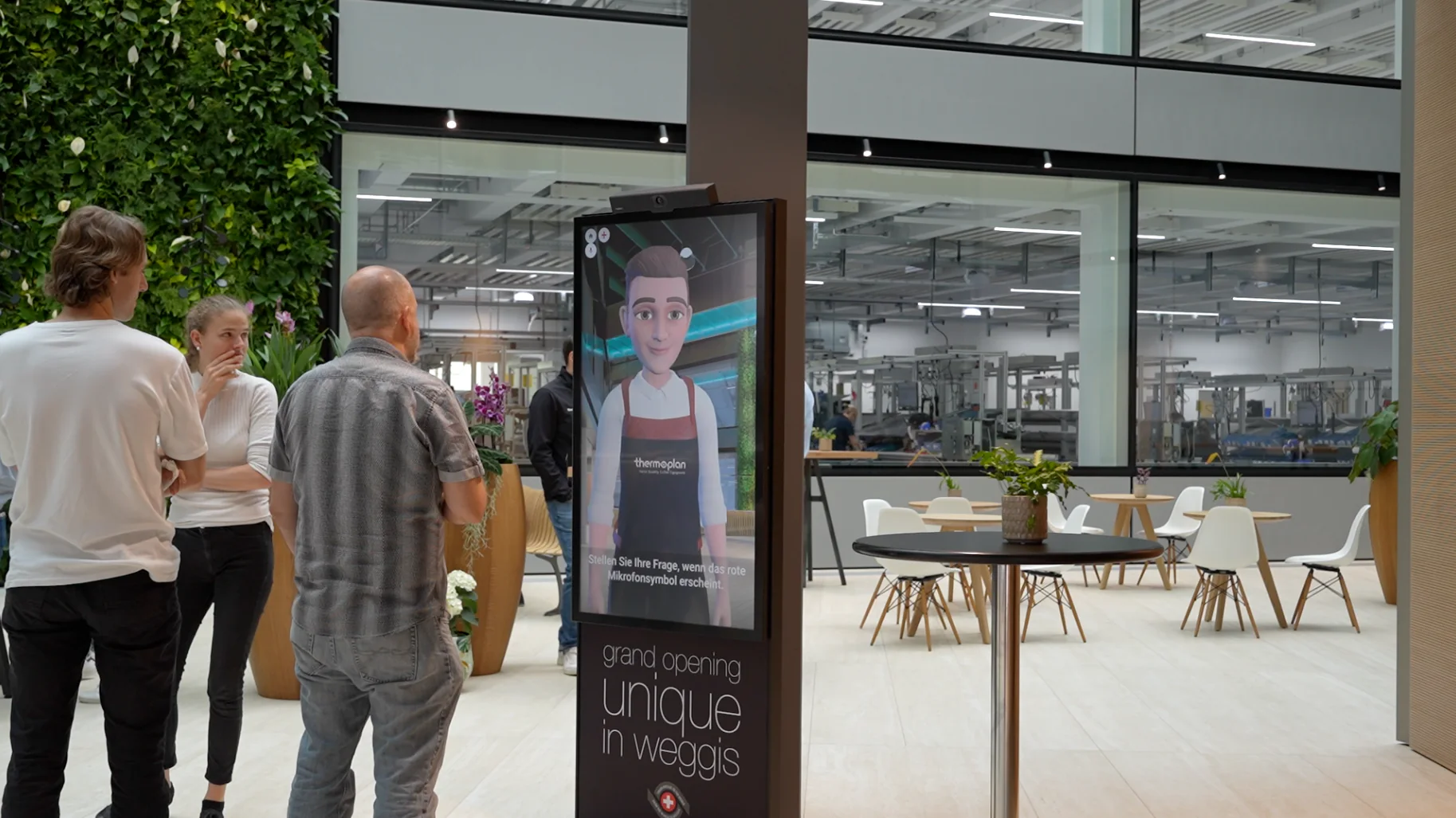
Reception in the foyer
As a character receptionist, the avatar greets guests in the foyer, answers questions and points the way — without a wait.
Two ways to give a face — with very different effects.
Deceptively real
- Uncanny-valley risk at the smallest flaw
- Raises deepfake suspicion and distrust
- Expectation of human omniscience
- Errors read as failure
Honestly artificial
- Allowed to visibly be a character — no discomfort
- Honestly artificial creates trust
- Realistically calibrated expectations
- Limits are forgiven, not punished
In the long run the world will face enormous challenges telling fact from fake anyway — which is why we have no desire to needlessly add to that trend with deepfakes.
The real hurdle isn't the technology. It's the first contact.
Getting people to interact
Not everyone spontaneously talks to a screen. Early on, many prefer to observe before they dare.
Some cultures are more reserved
Situations and societies differ in how openly they approach new forms of interaction.
Curiosity turns into habit
Visible role models and good placement with a bit of privacy lower the threshold — over time the interaction becomes familiar.
Make the avatar the obvious path
Genuine self-service isn't adopted overnight — it takes time. The most effective approach is to design the flows so the avatar becomes the natural path rather than an option on the side — like the ordering process at McDonald's kiosks.
The human accessibility of a conversation — with the advantages of digital systems.
More self-service
Recurring requests are handled on site — without a queue, without tying up staff.
Available 24/7
Requests can be handled outside opening hours too — around the clock.
Multilingual
Over 100 languages, switching seamlessly into the user's language — no translation in the team.
Highly adaptable
Appearance, tone, content and processes are tailored to your brand.
Central remote maintenance
Updates and content are maintained remotely — no on-site maintenance staff needed.
Scales across locations
Service quality can be rolled out consistently across locations and opening hours.
Frequently asked questions.
An interactive avatar is a digital, talking character that actively addresses people in public space, responds to requests in natural language and completes tasks together with them. It is interactive because it listens and answers, and proactive because it approaches people on its own.
Stylized avatars sidestep the uncanny valley, deepfake suspicion and inflated expectations of intelligence. A recognizable character is allowed to be a character, reads as honestly artificial and calibrates expectations realistically — its limits are forgiven more readily than those of a deceptively real face.
Because they don't judge anyone: a friendly avatar doesn't judge, doesn't get impatient and treats everyone the same. That reduces shame and the fear of prejudice — for young and old — and turns the interaction into a positive, playful moment.
Gaze, movement and voice engage our perception more than static displays. An avatar is perceived as a counterpart, not an advertising surface — and this attention is the precondition for a self-service offering to be used at all.
The real hurdle is the first contact: people have to enter into the interaction, and some users or cultures are more reserved. A proactive but non-intrusive presence, good placement, visible role models and a clear invitation lower this threshold noticeably.
They enable genuine self-service for recurring requests, are available around the clock, speak over 100 languages, are highly adaptable to brand and processes, and are maintained centrally and remotely — no on-site maintenance staff.
Let's talk about your touchpoint.
In 30 minutes we'll clarify where an interactive avatar makes sense for you — with a live demo. Directly with the team, no sales pitch.