Humanizing vs. D-ID: Avatars Compared
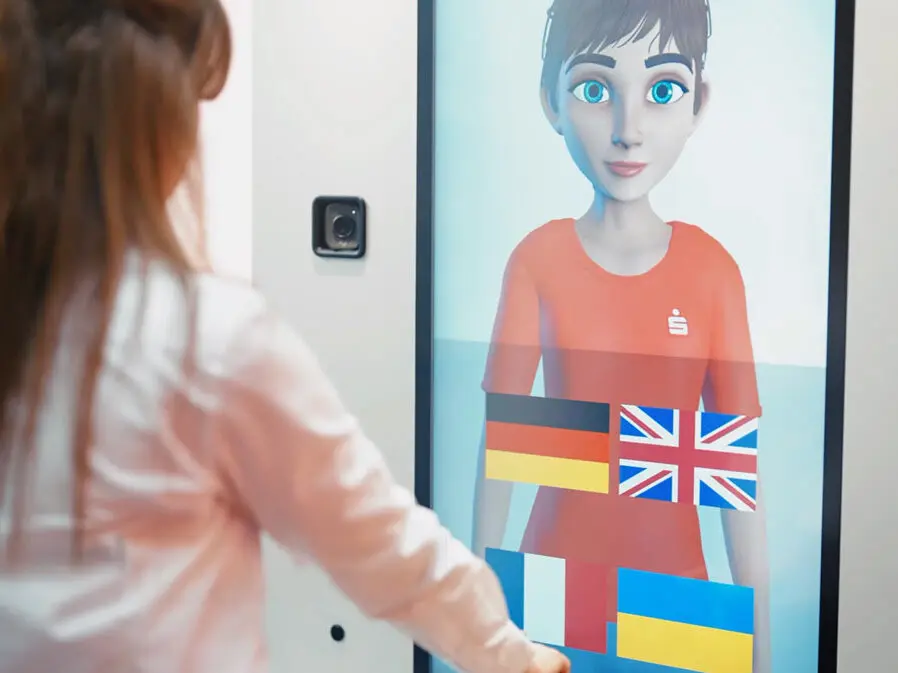
D-ID and Humanizing both work with digital avatars, but they take different approaches. D-ID is a platform and API for photorealistic talking avatars (Digital People): from a photo or video it generates speaking AI avatars for video creation and for real-time agents that developers can embed into their own applications via an SDK. Humanizing, by contrast, is not a pure platform but delivers ready-to-run, integrated avatar solutions for real service touchpoints — on stele, kiosk, tablet, web or smartphone, agentic and case-closing.
The decisive difference lies in the delivery model: D-ID provides the technology you use to build photorealistic avatars and videos yourself. Humanizing delivers the finished solution at the point of contact — GDPR-compliant, hosted in Germany, accessible under the BFSG, and backed by a dedicated solution architect. This post positions both approaches fairly and shows which solution fits whom.
What is D-ID?
D-ID is an AI platform for photorealistic Digital People — speaking avatars generated from a photo or video. The company positions itself around video creation (Creative Reality Studio), real-time-capable Visual AI Agents, and a developer API with SDK that lets you embed its animation and avatar technology into your own applications.
D-ID's focus is on generating and animating avatars: AI videos in minutes rather than days, voice cloning, more than 120 languages, and real-time streaming for interactive agents. Target audiences include marketing, content creation, learning and development, sales, and developers who want to integrate photorealistic avatars into their own products.
- Creative Reality Studio: AI videos from text, image and avatar
- Visual AI Agents: real-time avatars via streaming
- API & SDK for integration into your own applications
- Voice cloning and more than 120 languages
What does Humanizing do differently?
Humanizing does not deliver a pure build-it-yourself platform but a ready-to-run, integrated avatar solution for the specific service touchpoint. The avatar listens, speaks freely in real time, and handles requests agentically and case-closing — instead of just forwarding or playing a video.
Added to this is the delivery and compliance framework: Humanizing avatars run flexibly across hardware — stele, kiosk, tablet, web and smartphone — speak more than 100 languages, are accessible under the BFSG, and are hosted GDPR-compliant in Germany, with data kept in the EU. Larger initiatives are delivered as guided project work (KIM, Lucas, Charlotte, Promoter) with a dedicated solution architect; for a quick start there is the self-service edition Cosmo from EUR 40 per month.
- Ready-to-run, integrated solution instead of a toolkit
- Agentic and case-closing instead of merely forwarding
- Hardware-flexible: stele, kiosk, tablet, web, smartphone
- GDPR-compliant, hosted in Germany, data in the EU
- Project work plus self-service Cosmo from EUR 40 per month
Where do the differences lie in detail?
Both providers rely on digital avatars but differ on almost every practical dimension. D-ID is strong when you want to generate photorealistic avatars and videos yourself and embed them into your own products via API. Humanizing is strong when reception, a branch, or a factory gate needs a finished conversation partner that actually closes cases.
The following comparison sums up the key points — fairly, and without judging the other side's field of use.
- Real-time dialogue: D-ID offers streaming agents; Humanizing holds free real-time conversations at the point of contact
- Agency: D-ID agents can trigger workflows; Humanizing avatars handle requests case-closing
- Multilingualism: D-ID more than 120 languages (video/agent), Humanizing more than 100 languages at the touchpoint
- Hardware/touchpoints: D-ID primarily digital/web/app; Humanizing additionally stele, kiosk, tablet
- Privacy/DE hosting: Humanizing GDPR-compliant, hosted in Germany, data in the EU
- Delivery model: D-ID self-service platform & API; Humanizing integrated project plus Cosmo
Which use cases and what ROI result?
ROI arises in different places for each. D-ID raises it where photorealistic avatar videos are produced once and played out many times — for example in marketing, training or sales — or where developers integrate avatars into their own apps.
Humanizing raises ROI at the real service touchpoint. Because the avatar handles requests case-closing, it relieves staff at reception, on the phone and in service, keeps waiting times short, and serves several languages with no extra translation effort. More than 25 savings banks use Humanizing avatars in production; add to that wayfinding in large buildings, truck check-in at the factory gate, and product advice in retail — around the clock and identical at every location.
- Reception & branch: clarify a request and close it directly
- Wayfinding in large buildings in the chosen language
- Truck check-in at the factory gate with no waiting
- Self-service on the website that truly completes requests
Which solution fits whom?
The choice depends on what you want to deliver. If you want to generate photorealistic talking avatars and AI videos yourself, use voice cloning, or embed avatars into your own applications via API/SDK, D-ID is an obvious platform. If a finished, privacy-compliant solution is to advise live and close cases at the physical or digital point of contact, a Humanizing avatar is the right tool.
The approaches are not mutually exclusive: an avatar platform provides building blocks, while an integrated point-of-contact solution brings them ready to use in the DACH context — with hosting in Germany, accessibility under the BFSG, and a dedicated solution architect.
- D-ID: platform/API for photorealistic avatars and AI videos to build yourself
- Humanizing: ready-to-run, integrated point-of-contact solution with German hosting
- D-ID for marketing, content, L&D and developer integration
- Humanizing for reception, branch, factory gate and self-service with a DACH focus
Frequently asked questions
No. D-ID is a platform and API for photorealistic talking avatars and AI videos that you generate and integrate yourself. Humanizing delivers a ready-to-run, integrated avatar solution at the point of contact that works agentically and case-closing.
D-ID positions itself around photorealistic Digital People: video creation in the Creative Reality Studio, real-time-capable visual AI agents, voice cloning, more than 120 languages, and a developer API with SDK for integration into your own applications.
Yes. Humanizing avatars are hosted GDPR-compliant in Germany, and the data stays in the EU. The avatars speak more than 100 languages and are accessible under the BFSG; more than 25 savings banks use them in production.
When you want to produce photorealistic avatar videos yourself, use voice cloning, or embed avatars into your own products via API and SDK. For finished, privacy-compliant advice and case handling at the point of contact, a Humanizing avatar is the better fit.
Yes. A Humanizing avatar holds a free real-time conversation and handles requests agentically and case-closing at the point of contact — instead of merely forwarding or playing a video.
See Humanizing Avatars in action
Book a no-obligation intro call — we'll show you the use case live at your touchpoint.