Humanizing vs. Anam.ai: Platform or Ready-Made Solution?
Anam.ai and Humanizing both work with real-time AI avatars, but they start from different points: Anam.ai is a developer and SDK platform for conversational real-time avatars — an API with an avatar model, JavaScript and Python SDKs, and a no-code widget from which teams build their own avatar application themselves. Humanizing, by contrast, delivers interactive 3D AI avatars as ready-made, integrated solutions for real-world touchpoints — from the savings-bank branch to the wayfinding system to the truck check-in, including hardware, integration, and personal guidance.
The difference is therefore not a feature detail but a delivery model: with Anam.ai you receive building blocks with which your development team realizes an avatar. With Humanizing you receive a finished, brand-individually configured touchpoint that works agentically and resolves cases end to end, is hosted in Germany in compliance with the GDPR, and is supported from the solution architect through to rollout. Anyone who wants to build it themselves is well served by an SDK. Anyone who needs a ready-to-use touchpoint compares the two based on time-to-value, operations, and data protection.
What is Anam.ai?
Anam.ai is a developer platform for conversational real-time avatars. By its own account, Anam.ai provides an API for interactive AI avatars that lets companies turn text- or voice-based conversational AI into photorealistic video interactions. At its core are an avatar model, a developer SDK (including JavaScript and Python), and a managed platform with a no-code widget and API integration.
Anam.ai is thus aimed primarily at developers and teams who want to build a real-time avatar into their own applications — for example for customer service, sales, tutoring, or training. Highlighted features include low latency, support for multiple languages, various avatar styles, and capabilities such as tool calling and knowledge-base connectivity. The delivery model is a building kit and interface: Anam.ai provides the avatar technology, while the actual application is created in house.
What does Humanizing offer on top?
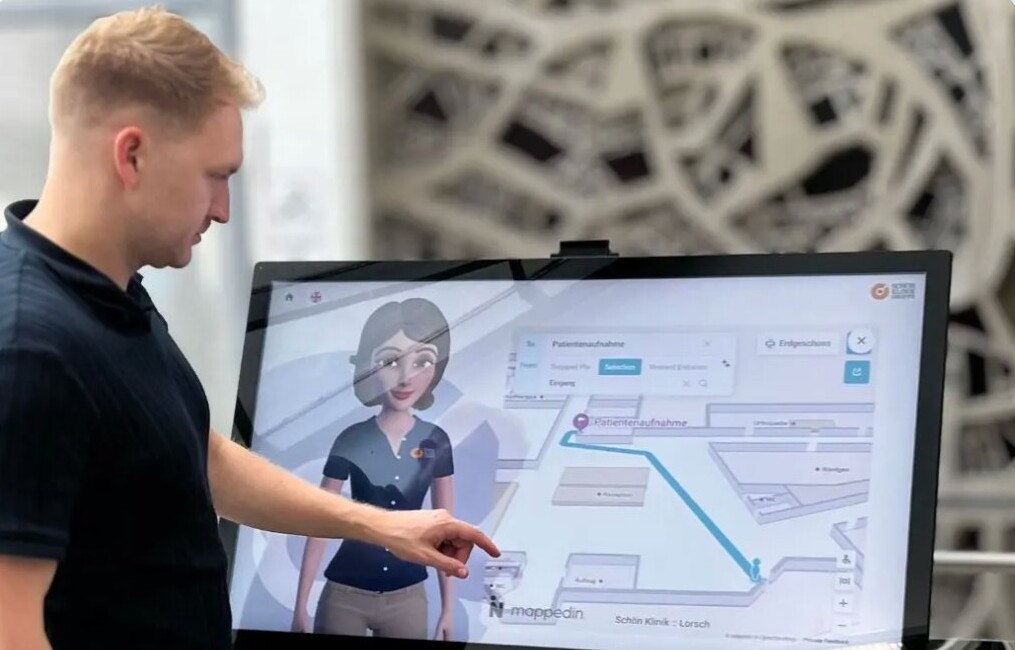
Humanizing delivers not just the avatar technology but the finished touchpoint. The interactive 3D AI avatars are designed to be agentic and case-resolving: they conduct conversations in more than 100 languages, resolve requests independently, and are intended as real-world touchpoints — not as building blocks from which something still has to be built.
Added to this is the depth of the solution: Humanizing avatars are brand-individually designed, hardware-flexible (stele, kiosk, tablet, web, smartphone), and accessible in line with the BFSG. Operations are GDPR-compliant with hosting in Germany and in the EU. Delivery comes either as a project engagement with a personal solution architect and a guided rollout — or as a self-service entry point via Cosmo from €40/month. 25+ savings banks already use Humanizing avatars in production.
- Agentic & case-resolving: solves requests independently
- 100+ languages, accessible in line with the BFSG
- Hardware-flexible: stele, kiosk, tablet, web, smartphone
- Brand-individual design instead of a generic avatar
- GDPR-compliant, hosting in DE/EU
- Project engagement with a solution architect or self-service Cosmo from €40/month
Build it yourself or buy a ready-made solution — what pays off?
The question is decided by total cost, not by the avatar model. An SDK platform like Anam.ai delivers powerful building blocks, but the deployable touchpoint only emerges through your own development: build the application, connect the conversation logic and knowledge, procure hardware, integrate into existing systems, operate, and maintain. This work rests with your team.
Humanizing takes on this value creation as a ready-made solution. Instead of budgeting development resources for an in-house application, you receive a configured avatar including integration, hardware options, and ongoing operations. For a fast, independent start there is Cosmo from €40/month; for individual touchpoints there is the guided project engagement. The calculation is rarely 'license vs. license' but rather 'in-house build plus operations vs. ready-made, supported solution'.
- SDK route: your own development, integration, hardware & operations in house
- Humanizing: finished touchpoint including integration and operations
- Quick entry via Cosmo from €40/month
- Individual touchpoints in the guided project engagement
What ROI in operation?
The ROI of avatar touchpoints shows up in four dimensions — and this is where the delivery model has a particular effect. When building it yourself via an SDK, your team bears responsibility for time-to-value, ongoing operations, integration, and data protection; that creates flexibility but ties up development and maintenance resources.
Humanizing shortens time-to-value because the solution is fully configured and rolled out with support, instead of having to be developed first. Humanizing handles operations and maintenance, so no in-house avatar application has to be maintained internally. Integration into existing workflows is part of the project. And data protection is settled from the start with GDPR compliance and hosting in Germany — a point that has to be ensured separately with self-developed solutions.
- Time-to-value: ready-made, configured solution instead of in-house development
- Operations & maintenance: by Humanizing instead of an internal team
- Integration: into existing workflows as part of the project
- Data protection: GDPR & DE hosting settled from day one
Anam.ai or Humanizing — how to evaluate?
Both approaches are valid and address different needs. Anyone looking for a developer platform to build real-time avatars flexibly into their own products while retaining full technical control will find a strong SDK and API foundation in Anam.ai. Anyone who instead needs a ready-to-use, brand-individual touchpoint for a branch, reception, or site — without an in-house development project — reaches the goal faster and with more support through Humanizing.
The decision depends on whether you want to build or to operate. As a rule of thumb:
- Anam.ai, if you have a development team and want to integrate avatars into your own software yourself
- Humanizing, if you need a finished, integrated touchpoint at real-world touchpoints
- Humanizing, if GDPR, DE hosting, and accessibility (BFSG) must be in place from the start
- Humanizing, if you want to go live quickly without a development project — self-service via Cosmo or a guided project engagement
Frequently asked questions
Anam.ai is a developer and SDK platform for conversational real-time avatars: it delivers API, SDK, and avatar model from which teams build an application themselves. Humanizing delivers ready-made, integrated 3D AI avatar solutions for real-world touchpoints — including hardware, integration, operations, and personal guidance.
It depends on your goal. If you have a development team and want to integrate real-time avatars into your own products yourself, Anam.ai is a suitable SDK platform. If you need a ready-to-use, brand-individual touchpoint without an in-house development project, Humanizing delivers the finished solution.
No. Humanizing delivers the avatar as a ready-made, integrated solution. In the project engagement, a personal solution architect configures the touchpoint and supports the rollout; for a quick start there is the self-service Cosmo from €40/month.
Humanizing avatars are GDPR-compliant and are hosted in Germany or the EU. In addition, the solutions are accessible in line with the BFSG. This means data protection and accessibility are settled from day one, without you having to ensure them separately.
Humanizing is hardware-flexible: the avatars run on a stele, kiosk, tablet, on the web, and on a smartphone. This lets the same touchpoint be deployed at different points of contact.
The Humanizing avatars speak more than 100 languages and work agentically and end to end — they resolve requests independently instead of merely forwarding them. Already 25+ savings banks use Humanizing in production.
See Humanizing Avatars in action
Book a no-obligation intro call — we'll show you the use case live at your touchpoint.